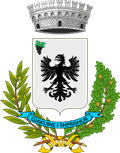
The name "Maschito"
Most Maschitan families know the story. The village was founded by Albanian men who came without wives and married girls from the towns nearby, so it was called the "town of males." Ann La Centra Backen heard it from her mother (see her booklet), and Andy Caglia heard the same story from his own mother. Another legend tells how the men of Maschito carried off brides from Venosa. The Venosans got even by stealing the statue of Maschito's patron saint, who at that time was San Rocco.
Historians think the name is older than the Albanians. The best guess is the Latin word masculetum, which the Roman writer Pliny used for a vineyard planted with "male" vines. That fits a village that has always lived by its wine. An older theory traces the name to mespletum, a grove of medlar trees. In the village dialect the name is Maschëìtë; in Arbëreshë, Mashqiti.
Before the Albanians
In Roman times Maschito's hills belonged to Venusia (Venosa), a Roman colony founded in 291 BC on the Via Appia. Venosa's Roman aqueduct started in Maschito territory, at a spring called the Toppo dell'Acquattora, and carried water about six miles to the city. Later, a branch of the Via Herculia road ran from Venosa through Maschito to Forenza. The remains of Roman farms and country houses have been found along it.
Venusia's most famous son was the poet Horace (Quintus Horatius Flaccus, 65–8 BC). The son of a freed slave, he became one of Rome's leading poets in the time of the emperor Augustus. In one of his Odes (III.4) he recalls a day from his boyhood. He wandered onto the slopes of Mount Vulture, the mountain you can see from Maschito, and fell asleep, and wild doves covered him with leaves. He says people in the hill towns nearby were amazed, and one of the towns he names is "low-lying Forentum," today's Forenza, right next to Maschito.
By the Middle Ages there was a small walled village here. Like many villages in the region, it was abandoned in the 1300s, a century of war and plague. So the Albanians did not found a new village; they resettled an old one.
Skanderbeg, hero of the Albanians
Albanians everywhere, including the Albanians of Italy, consider George Castriota Skanderbeg (Gjergj Kastrioti, about 1405–1468) their national hero. His father, Gjon Kastrioti, was an Albanian lord who had been forced to submit to the Ottoman sultan. As was the custom, the sultan took the lord's sons as hostages, and George grew up at the Ottoman court. There he became a Muslim, trained as a soldier, and rose to be an officer and governor. The Turks called him Iskender Bey, "Lord Alexander," after Alexander the Great. That is where the name Skanderbeg comes from.
In November 1443 the Ottoman army was fighting the Hungarians near Niš, in today's Serbia. Skanderbeg deserted with about 300 Albanian horsemen and rode home. Using a forged order from the sultan, he took over Kruja, his family's fortress. He went back to the Christian faith and raised a red flag with a black double-headed eagle, which is still the flag of Albania. In 1444 he united the Albanian lords in the League of Lezhë.
For twenty-five years Skanderbeg held off the strongest empire of his time and beat back three major sieges of Kruja. He was also an ally of the kings of Naples. In 1461 he brought his troops to Italy to help King Ferdinand I put down a revolt by the barons, and the king gave him land in Apulia. That alliance probably explains why Maschito's founding is traditionally dated to 1467.
Skanderbeg died of fever at Lezhë on January 17, 1468. Without him the resistance fell apart. Kruja fell in 1478 and Scutari in 1479, and many Albanians, including his widow and son, fled across the sea to the Kingdom of Naples. The Arbëreshë of Italy have looked to Skanderbeg as the symbol of where they came from ever since. His statue stands in the Piazza Albania in Rome (see the photograph in Nasse's study), and Ann La Centra Backen tells his story in her booklet.
The Albanians arrive
Tradition says Maschito was founded in 1467, when Skanderbeg sent soldiers to help the king of Naples. These soldiers were stradioti, Albanian light cavalry. The documents show their families settling here in several waves:
- 1478–79: after the Turks took Kruja, Skanderbeg's old stronghold, and Scutari (Shkodër), in northern Albania, a small first group of Albanians settled at Maschito.
- 1495: Troiano Caracciolo, Duke of Melfi, gave the villages of Ginestra, Maschito and Barile to Greek and Albanian refugees.
- 1507 and 1519: Lazzaro Mathes, a captain of stradioti serving Spain, was granted tax exemptions for "his" empty village in 1507 by the Spanish commander Gonzalo de Córdoba. In March 1519 Emperor Charles V, who was also King of Spain and King of Naples, gave him Maschito as a fief, with permission to build houses and settle it with Greeks and Albanians. His sons Giovanni and Angelo, also captains, led Maschito's soldiers after him.
- 1534: Corone, a town in southern Greece, was handed over to the Turks, and its refugees, the Coronei, were resettled in this region. About 100 Coronei families came to Maschito, 52 to Barile and 30 to Melfi.
The two groups lived in separate parts of the village. The first settlers, from Scutari and northern Albania, lived in the south end and were nicknamed Cntrgnar. The Coronei, from southern Albania and the Mani, settled the north end, called Majsor. Tradition says the hill they built on was called Mustafà, and that the village was first named Giorgiano after Skanderbeg.
A report from 1551 describes the settlers bluntly. They had been the Emperor's soldiers. When the wars ended they roamed the countryside "like wild men" until they were told to settle down or leave the kingdom. At first they lived in caves and huts. Then they leased land from the Bishop of Venosa to build houses and plant vineyards. By 1551 Maschito had more than 200 households, nearly all of them paid by the king as cavalrymen. They also had special privileges and tax exemptions, which their descendants defended for generations with documents and family trees.
Faith and churches
The settlers brought the Greek rite of the Eastern Church with them, the same service used by the Orthodox Church. For about a century Mass in Maschito was said in Greek. At that time the line between Orthodox and Catholic was not clear-cut in southern Italy. The Albanian priests were often ordained by Orthodox bishops back in the East, but they answered to the local Roman Catholic bishops, who wanted them to switch to the Latin rite. The Italo-Albanians did not get a Catholic church of their own Eastern rite, with its own bishops, until much later: at Lungro in Calabria in 1919 and at Piana degli Albanesi in Sicily in 1937. By then Maschito had long since become Latin rite. George Nasse describes these churches in his study.
Maschito is said to have had about fifteen churches and chapels. Those now gone include San Nicola, where the Greek rite was celebrated, San Basilio, San Rocco, San Domenico, Santa Venere, the Virgin of Constantinople and the Madonna delle Fonti.
The Roman Catholic bishops pushed hard for change. When the Bishop of Venosa visited in May 1589, he found three Greek-rite priests who looked to him "more like Arabs than clergy." He inspected the church of Saint Elia, ordered a silver tabernacle and a proper stone baptismal font, and hoped to bring the village over to the Latin rite soon. In 1628 Bishop Diodato Scaglia of Melfi banned the Greek rite in Maschito and Ginestra.
The Mother Church of Saint Elia was already standing in 1589. It was consecrated on November 14, 1653, and dedicated to the Holy Trinity in 1698. It holds the "Madonna of the Seven Veils," believed to be miraculous, along with stucco work by Domenico Pennino and paintings attributed to Giovanni Battista Caracciolo. The Coronei built the Caroseno church, which has a fresco of the Madonna and Child dated 1558, and the church of the Purgatory, now called the church of the Rosary. Saint Elia the Prophet is Maschito's patron saint today. He is honored in the village and, since the early 1900s, by Maschitans in Fresno (see the Saint Elia Celebration).
Life in the village
Two surveys from the early 1600s give a picture of daily life. In 1615 Maschito had three shops, a shoemaker, two barbers and a midwife, but no doctor and no pharmacy; medicine came from Venosa. Most people slept on straw mattresses, got their water from three springs, and ground their grain at the village mill. The houses were simple; only three were built of cut stone. In winter the streets turned to mud, "this being clay country." In 1635 there were 51 households, all Albanian. They lived by farming, and the women also spun, wove and sewed. They bought cloth and other goods at the fair in Venosa. A churchman wrote in 1728 that the people "keep the language of Epirus, but also speak Italian."
Other families joined them. In 1647 more Greeks came from Messenia, in southern Greece. Italians from Avigliano and Potenza settled on the nearby hill of Manes as shepherds and farmers and later moved into the village. Water came from public fountains that Maschitan families still know by name: the Carrozza, the Boico, the della Noce and the Cangad.
Most of all, Maschito lived by its vines. A gazetteer from 1802 says the soil was volcanic and the wine very strong. It was so strong that growers mixed water from the cold Boico spring into the must, the freshly crushed grape juice, stretching their wine by about a third. At harvest time, it says, people would ask each other, "How much did the Boico fountain yield you this year?" The wine was sold by the load in Apulia. About a mile south of the village was a bubbling sulfur spring called the Lago fetente, the "stinking lake." People used its water as a cure.
Lords, land and freedom
Maschito began as a village under Venosa, on land owned by the Bishop of Venosa and by the Knights of Saint John of Jerusalem. In 1539 the land passed to Don Giovanni de Icis. In a contract of 1541, made under Don Pedro de Toledo, the Spanish Viceroy of Naples, the Albanians agreed to pay him one ducat a year for each household. In short, the records show that the Bishop of Venosa owned the land, the King of Spain granted the settlers their rights and privileges, and the viceroy's government drew up the contract. By 1696 Maschito was a town in its own right, no longer under Venosa.
In the 1700s the village belonged to the Carafa family, Dukes of Andria, who may have lived in the Palazzo Rafti. Their rights ended when feudalism was abolished. On November 27, 1809, a royal commission ruled for Maschito and ended the duke's tax on every household, his market and grazing fees, and his monopoly on the two mills. Even so, much of Maschito's farmland stayed in church hands and was worked by tenant farmers. In the early 1800s more than half the villagers made their living on land that had belonged to the Knights of Saint John.
Notable Maschitans
- Giovanni Giura, a well-known lawyer in Naples, and his son Michele, a canon of the Naples cathedral. A history of Venosa from 1728 mentions them, so the Giura family was prominent long before its two famous brothers.
- Luigi Giura (1795–1864), engineer, and Rosario Giura (1801–1854), judge and member of parliament: see I Fratelli Giura.
- Brother Rosario Adduca (1793–1860), a shepherd boy who became a Redemptorist lay brother in Sicily. He was known for his holiness and has been declared a Servant of God, the first step toward sainthood. His relics are in Maschito's church of the Rosary.
- Paolo Emilio Savino (1839–1915), a doctor, scholar and linguist who gave up his medical practice in Maschito and spent forty years as a missionary in the Americas, India, China and Japan.
- Luigi Cariati, a leading lawyer, born in Maschito. A street in Maschito and a square in Melfi are named for him.
Maschito's population through the centuries
Early counts were made for taxes and counted households (fuochi, "hearths"), not people. A household averaged about five people.
| Year | Count | Source |
|---|---|---|
| 1551 | more than 200 households | Inventory of the State of Venosa |
| 1595 | 213 households | Royal tax count |
| 1635 | 51 households (about 255 people) | Survey of Venosa |
| 1648 | 90 households | Royal tax count |
| 1669 | 156 households | Royal tax count |
| 1735 | about 1,300 people | Description of Venosa |
| 1802 | about 2,740 people | Giustiniani, Dizionario geografico |
| 1816 | 2,892 people | Census |
| 1994 | about 2,000 people | Ladies' Association booklet |
| 2019 | 1,568 people | ISTAT (Italy's statistics office) |
The ups and downs reflect war, plague, new arrivals and changes in how the counts were made. Later, emigration to the Americas took many families away, including those who came to Fresno.
Sources
- Antonio Capano, Considerazioni storiche su Maschito (PZ) tra l'antichità e l'età moderna (Agropoli, 2021), the source for most of the Maschito documents and dates on this page, including the older works it quotes: Lorenzo Giustiniani, Dizionario geografico ragionato del Regno di Napoli (1802), and Antonio Corsignani's history of Venosa (1728).
- Ann La Centra Backen, Maschito, Italy: A Short History of the Maschitan People and Their Dialect (1996): the family stories.
- Ladies' Association of Maschito, Maschito: A Small Country Built Upon History & Legend (English translation 1997): the churches, legends and 1994 population.
- George Nicholas Nasse, The Italo-Albanian Villages of Southern Italy (1964): the Greek-rite churches of the Italo-Albanians.
- Horace, Odes, Book III, Ode 4; and "Horace," Encyclopaedia Britannica: Horace and Mount Vulture.
- "Skanderbeg," Encyclopaedia Britannica: Skanderbeg's life.
- ISTAT (Istituto Nazionale di Statistica, the Italian National Institute of Statistics), Italy's official statistics office: the 2019 population.
Last updated October 2026. This page is a work in progress; corrections and additions are welcome.